









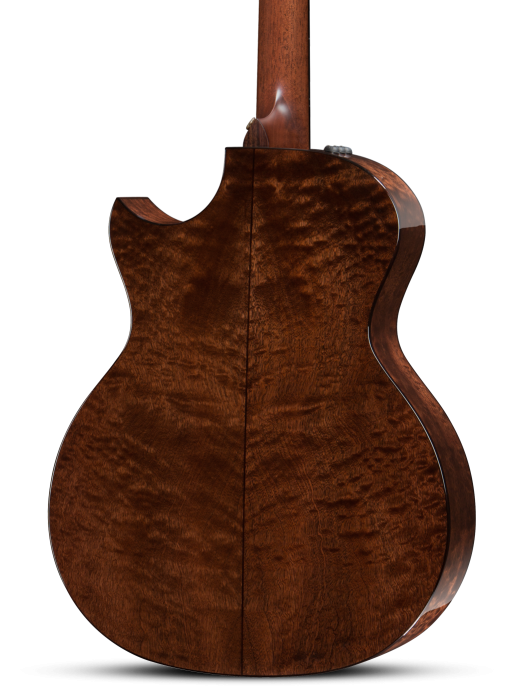
Quilted Sapele
Origin: West Africa
Used On: Limited Editions, Build to Order
In contrast to the relatively straight-grained sapele used for backs and sides in Taylor’s 300 Series, quilted sapele is an extremely rare and precious find. Rare enough that years can pass between appearances. While standard sapele is normally quartersawn, which contributes to its overall stiffness, quilted sapele is often flatsawn. This not only allows the beautiful figure to be showcased to maximum effect, it also produces more flex in the wood. This translates tonally into slightly more power and warmth than standard sapele, which typically has a mahogany-like tone with a more pronounced treble zing.
Goes Well With: Most playing styles. Like standard sapele, it’s a great all-purpose tonewood that will respond well to a variety of playing styles. If you like mahogany, you’ll like this tone profile. Strummers will appreciate the extra power in the lower midrange, while fingerstylists will enjoy the warmth.