A kop top's visual beauty is instantly inspiring, while its sonic rewards unfold over time, as warm, sweet overtones gradually emerge.
Sitka Spruce
The soundboard choice for most guitars, Sitka spruce produces a broad dynamic range and accommodates a versatile range of playing styles.
Western Red Cedar
A true performer for those with a lighter touch, cedar tops yield extra warmth and pair nicely with mahogany and rosewood.
Adirondack Spruce
Loud, dynamic, clear and undeniably loud, Adirondack is a good match for players with a driving attack.
Engelmann Spruce
Engelmann's mature tone compared to Sitka tends to yield an extra splash of midrange warmth and richness.
Tropical Mahogany
As a hardwood top, mahogany's density translates into a bright tone that develops more overtone bloom with increased playing.
European Spruce
Similar to Engelmann spruce, with extra headroom and overtone warmth for a robust, mature sound.
Sinker Redwood
Reclaimed from Northern California rivers, sinker’s warmth is similar to cedar, with a bolder response.

Origin: Australia
Used On: Limited Editions, Build to Order
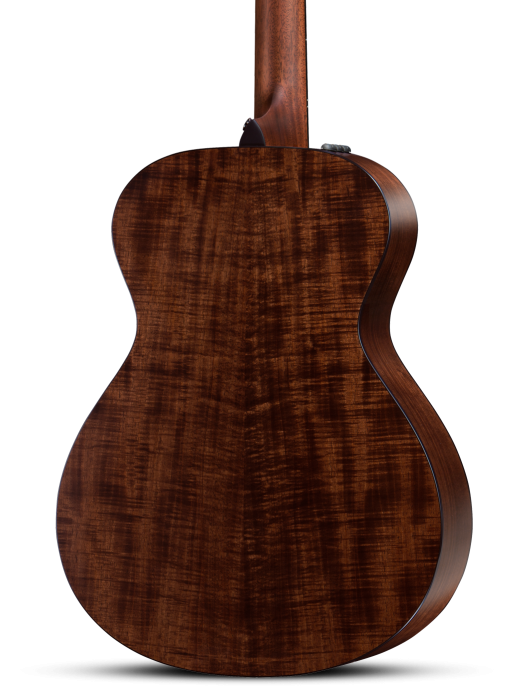
Tasmanian blackwood is an acacia wood species that’s a close cousin of Hawaiian koa. Though it might not match koa’s cachet in terms of exotic beauty, its tonal range is similar, and visually it often exhibits some of koa’s same character traits. Blackwood also is sourced from forests that are responsibly managed, making it a sustainable wood for guitar making. Blackwood takes koa’s basic tonal profile (a blend of mahogany’s meaty midrange and maple’s brightness) and adds a splash of rosewood’s overtone bloom.
Goes Well With: Different playing styles, depending on the body style and top pairing. A cedar top will help bring out a springy, woody, warm low end with a rich overtone complement that fingerstylists may really enjoy. Stronger strummers and flatpickers will match up well with a bigger body and might be better suited with a spruce top.