








Tropical Mahogany

Overview: Harder, denser woods like mahogany and koa that are used on the back and sides of a guitar are sometimes used as tops. Their stiffness initially translates into a bright tone and tends to need more play-in time to open up, but the more a mahogany-top guitar is played, the more it develops overtones that contribute to a fuller, richer sound. A mahogany-top guitar might appeal to rootsy players who like a little extra punchiness in their tone.
Origin: India, Central and South America
Goes Well With: Blues and roots players, anyone who likes an slightly more burly or punchy quality to their tone.


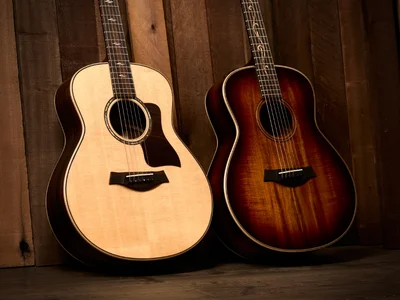
Hard Woods vs. Soft Woods
Guitar top woods fall into two general categories: hardwoods and softwoods. So what are softwoods and hardwoods, and what’s the difference between a softwood top and a hardwood top?
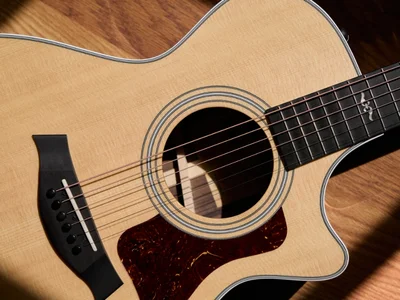
Top Woods
The unique acoustic properties of top woods help color a body shape’s fundamental sound. The key is to find the wood that matches up best with your playing style, like the warmth of a cedar top for fingerpicking and the feeling of responsiveness in your hands.
Explore All Acoustic Features


Top Woods
The type of wood used for a guitar’s soundboard has a major impact on its tonal properties.

Series
Each acoustic series boasts a unique package of visual details that enhance the aesthetic appeal.

Electronics
Our inspired proprietary pickups faithfully reproduce the natural nuances of a Taylor guitar’s voice.

Specialty
Guitars with a unique musical personality, including 12-string, 12-fret, nylon, baritone and travel.

Finishes
Taylor’s eco-friendly, UV-curable finishes protect your guitar and keep it looking and sounding great.

Bracing
Bracing patterns, such as our new V-Class design, bring out each guitar’s unique voice.

Necks
Our patented neck design ensures superb intonation, playability, and lasting stability.

Cutaways
Our elegant cutaways add to a guitar’s shapeliness and broaden your playing range.

Armrests
An armrest softens the edge of a guitar body to create a more comfortable playing experience.