




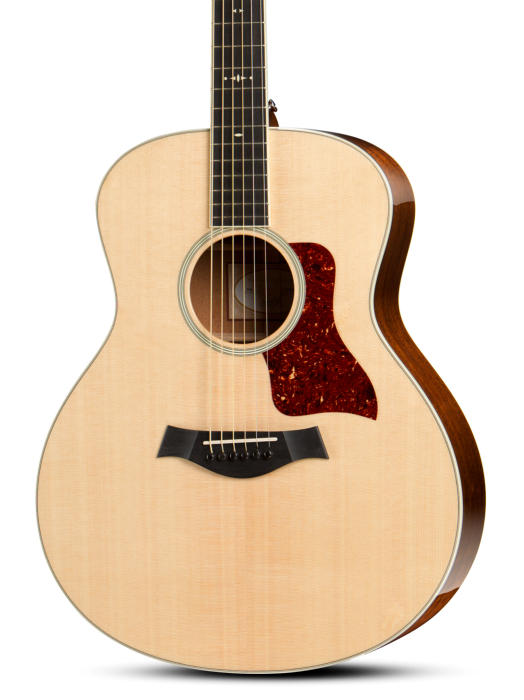
A kop top's visual beauty is instantly inspiring, while its sonic rewards unfold over time, as warm, sweet overtones gradually emerge.
Sitka Spruce
The soundboard choice for most guitars, Sitka spruce produces a broad dynamic range and accommodates a versatile range of playing styles.
Western Red Cedar
A true performer for those with a lighter touch, cedar tops yield extra warmth and pair nicely with mahogany and rosewood.
Adirondack Spruce
Loud, dynamic, clear and undeniably loud, Adirondack is a good match for players with a driving attack.
Engelmann Spruce
Engelmann's mature tone compared to Sitka tends to yield an extra splash of midrange warmth and richness.
Tropical Mahogany
As a hardwood top, mahogany's density translates into a bright tone that develops more overtone bloom with increased playing.
European Spruce
Similar to Engelmann spruce, with extra headroom and overtone warmth for a robust, mature sound.
Sinker Redwood
Reclaimed from Northern California rivers, sinker’s warmth is similar to cedar, with a bolder response.

Origin: Western North America
Used On: The 700 Series, 510ce, 516ce, DN7, Limited Editions, Custom Guitars
Engelmann is also known as white, European or German spruce, although they are technically different species. It is usually visually distinguishable from Sitka by its creamier complexion. We're almost out of the “good stuff.” Engelmann trees these days are so small and twisted that we get a fair amount of runout (grain that doesn't run parallel to the surface) and as a result, mismatched tops.
Sonically, Engelmann has a mature tone, and yields a slightly richer midrange than Sitka, which makes a guitar sound a bit older. Old growth Engelmann tends to have a sonic attribute of smoothness or refinement to it, but the days of older growth Engelmann trees are essentially gone for now.
Goes Well With: All styles of guitars and players.